

Renol® - where sustainability meets performance
Reduce fossil dependency and lower CO2 emissions without compromising performance nor disrupting production.
Sustainable alternative to fossil plastics
At Lignin Industries, we help our customers reduce fossil dependency and lower CO2 emissions, without compromising on performance. Renol® is designed to deliver exactly that. By harnessing the natural strength of lignin, we offer a material solution that combines sustainability with industrial reliability. Renol® enables a resilient and scalable alternative to fossil-based plastics, built on abundant raw materials and designed to meet performance requirements. At the same time, it supports your sustainability targets while remaining easy to adopt within existing processes and systems.
Explore the benefits of Renol® below and discover how it can support your business.
Click each benefit to learn more.
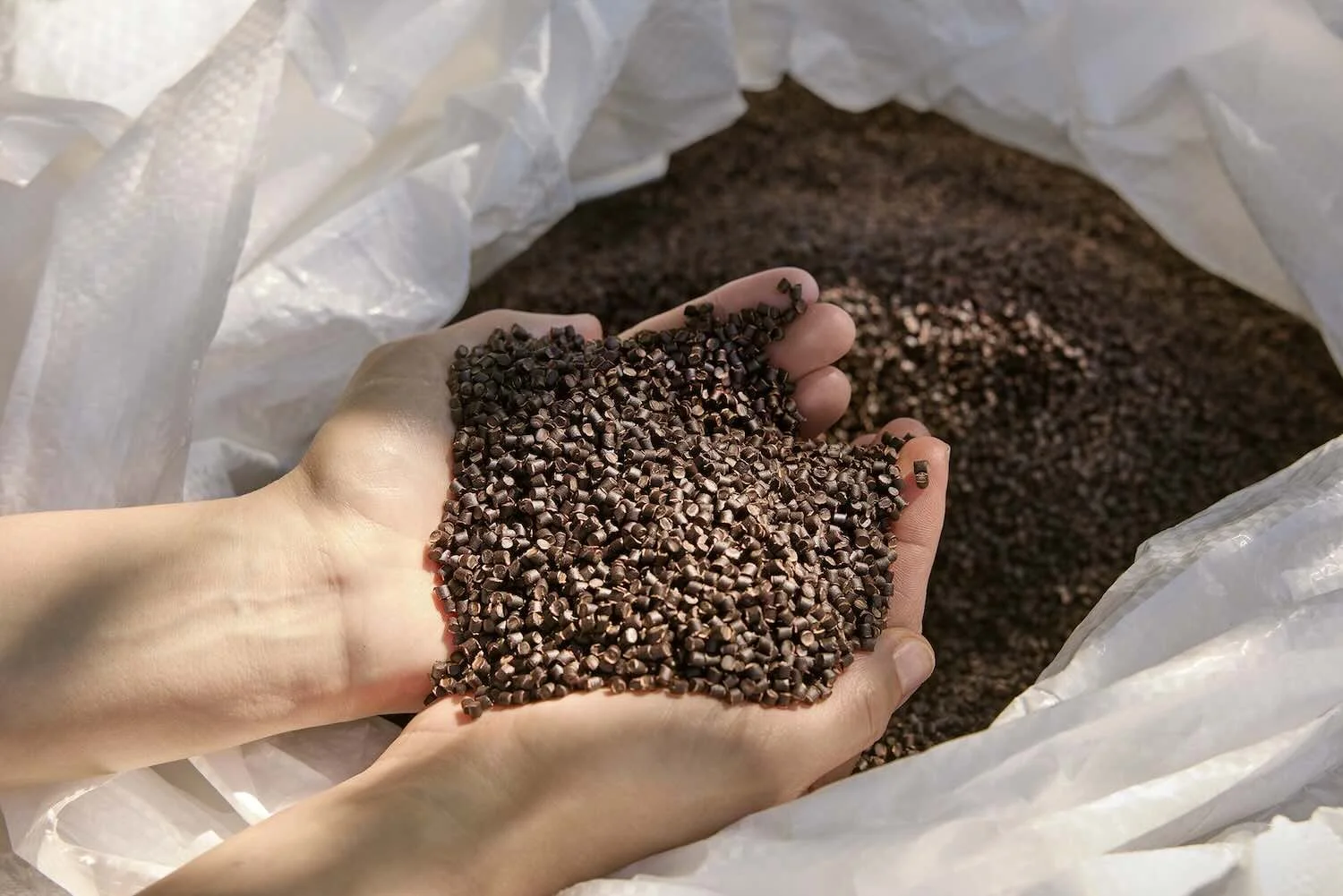
High-performing
Experience efficient production as well as conversion, and receive final applications with consistent, high-quality performance.
Optimal processability
Temperature resistant
Antioxidant features
Durable and well-defined properties
Low density material
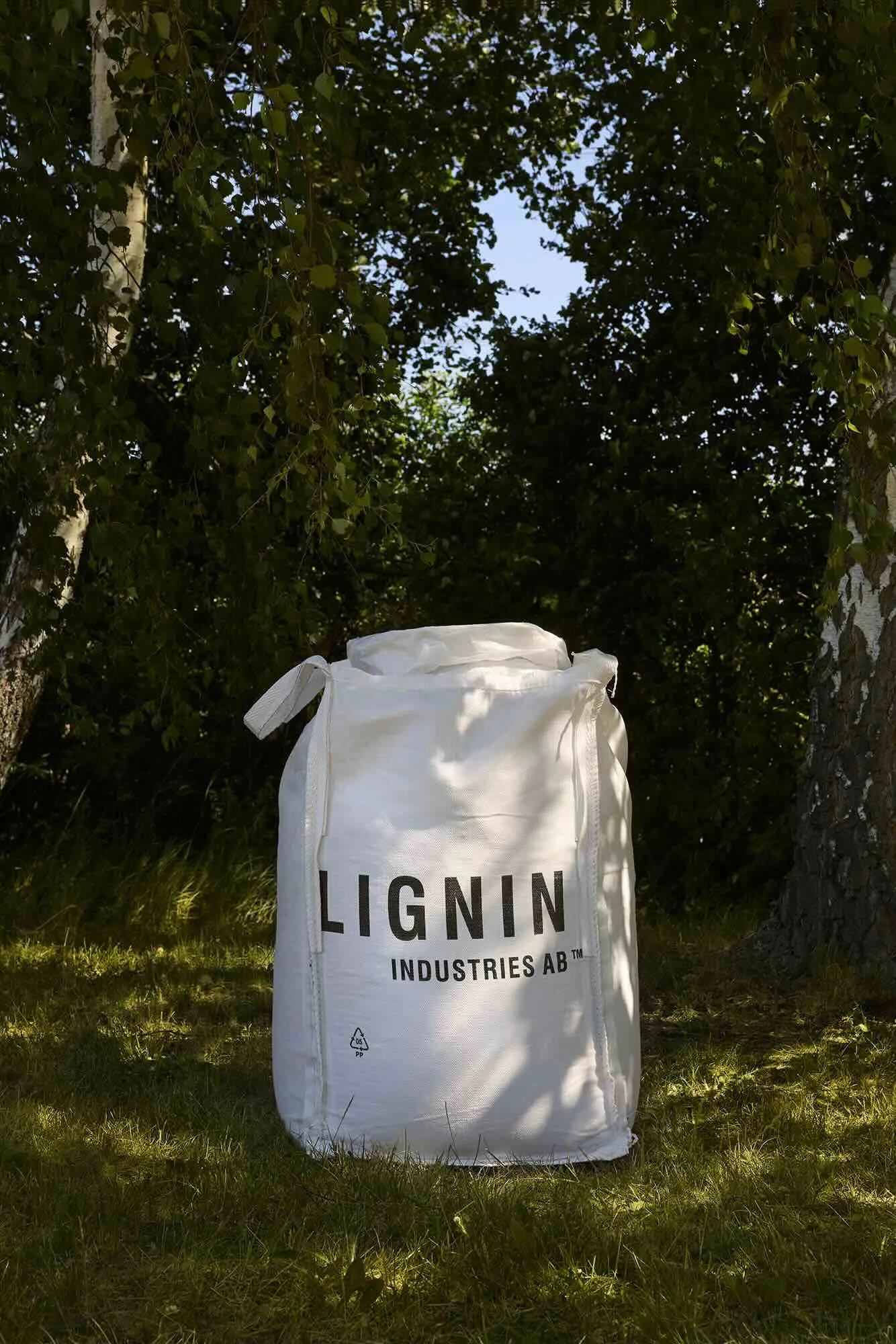
Resilient & Scalable
Reduce risk, secure supply, and stay competitive with a material solution built for industrial scale and seamless adoption.
Reduced fossil dependency
Locally sourced
Seamless drop-in solution
Scalable production
Price competitive
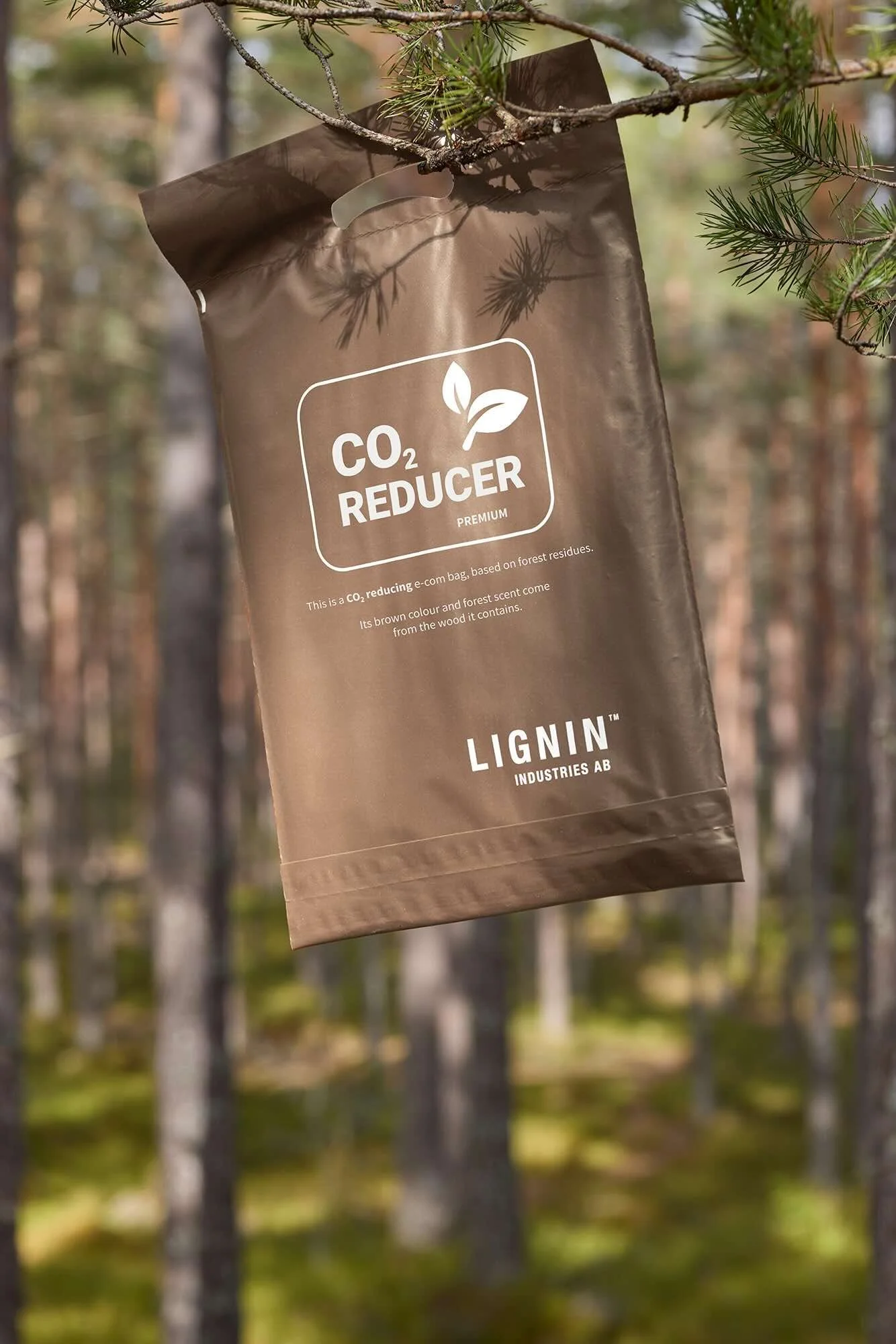
Sustainable & Circular
Reduce environmental impact and improve resource efficiency with a material designed for circularity.
- Based on renewable, secondary material
- CO2 reducing
- Recyclable by design
- Improved resource efficiency
- Natural look and feel
Learn more about the benefits of Renol®
High-performing
Optimal processability
- Renol® offers smooth processing in existing machinery in comparison with other biobased and recycled materials.
- Renols® shear-thinning properties enables lower processing temperature by 10-20 degrees during conversion. It reduces energy demand and thermal stress compared to standard polymer processing conditions.
Temperature resistant
- Renol® has a unique property of being able to be processed up to at least 230 degrees without being burnt, allowing for high-temperature production.
Antioxidant features
- Lignin is a natural antioxidant. Thus, Renol® stabilises polymers in high-temperature processing (including recycling), reducing degradation and the need for synthetic antioxidants.
Read more in the Renol Recyclability Report
Durable and well-defined properties
- Renol® has stable and well-defined material properties, designed to meet industry requirements.
- Renol® is designed for long-live applications, water contact and recycling as it does not degrade, contributing to a circular economy.
Low density material
- Renol's® low density enables lightweight applications compared to fillers or other biobased materials.
- Renol® enables Ku-fizz lightweight foaming in PP and ABS, resulting in lower material use, product weight and CO2 emissions.
Resilient & Scalable
Reduced fossil dependency
- Renol® is made from 100% biobased materials: lignin and biobased oils. When we produce Renol® masterbatch we blend lignin with a carrier polymer. The bio-based content ranges from 60-96% depending on masterbatch selection.
- By lowering exposure to the oil sector, you gain increased control of material supply, cost stability and reduced sensitivity to price fluctuations.
Locally sourced
- Lignin is globally abundant, enabling a localised production model. Today, Renol® is produced in Europe using European raw materials
- A localised production model reduce dependency on long supply chains, transportation, and geopolitical factors.
Seamless drop-in solution
- Renol® integrates easily into existing operations – minimising complexity, cost/investments and environmental impact.
- Renol® can be used directly in conversion processes without prior compounding.
- Renol® requires no changes to equipment nor tooling as Renol® works with existing manufacturing processes.
Scalable production
- Based on lignin, a widely available by-product, Renol® is designed for scale.
- Production of Renol® rely on standard equipment and existing infrastructure, enabling efficient and global scalability.
- Conversion also rely on existing equipment and infrastructure, making it easy for customers to scale with Renol®.
Price competitive
- Renol® is already cost-competitive with most bio-based plastics, with selected masterbatches now nearing fossil-based cost parity and with a clear path to cost neutrality across most applications in the near term.
- Reduced exposure to oil price volatility and flexible dosing provide additional cost control in final applications.
Sustainable & Circular
Based on renewable, secondary material
Renewable material
- Renol® is 100% biobased, made from lignin from the forest or agricultural industries combined with a biobased oil.
- When we produce Renol® masterbatch we blend lignin with a carrier polymer, preferably recycled feedstock. The bio-based content ranges from 60-96% depending on masterbatch selection.
Secondary bio-based material
- Renol® is based on lignin, biomass waste feedstock from the forestry and agricultural industries (secondary biomaterial).
- Unlike many bioplastics, Renol® does not rely on food crops (like sugarcane or corn), avoiding competition with agricultural land and global food supply.
CO2 reducing
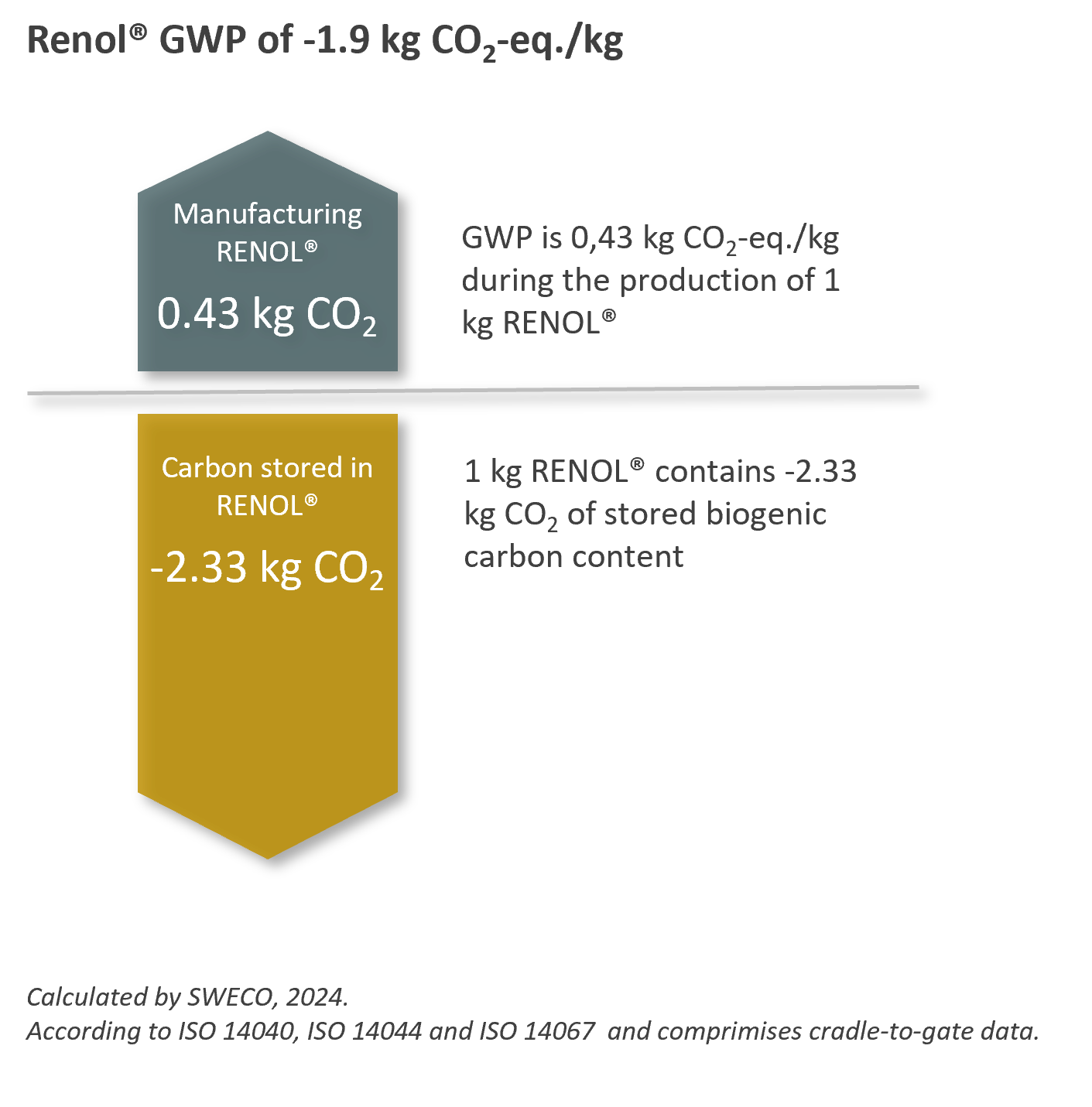
- By utilising lignin from forest residues, Renol® benefits from the natural carbon cycle. As a natural carbon sink, lignin stores the CO2 absorbed by trees during growth, enabling significant reductions in carbon footprint compared to fossil-based plastics.
Recyclable by design
Independent testing and certification demonstrate that Renol® blends with plastics such as ABS, PE, PP and TPV are fully recyclable in both open- and closed-loop recycling systems. Moreover, Renol® is a biobased antioxidant, bringing improved polymer stability in re-processing, making it a natural enabler of the circular economy.
-
In our Renol® Recyclability Report we have gathered facts about how Renol® functions in the different stages of the recycling process. The report includes analysis of Renol’s sortability, its re-processability and its mechanical properties preservation after being recycled.
Key highlights:
Certified Recyclable: Renol®-based PE and PP-packaging scored 19/20 points in Interzero’s “Made for Recycling” certification, corresponding to the classification “very good” recyclability.
High Sortability: Near-infrared (NIR) sorting shows 82-100% accuracy for LDPE films and 94-100% for PP parts.
Thermal Stability: Renol® masterbatches are processable at standard temperatures for recycling PE, PP, and ABS.
Antioxidant Benefits: Lignin’s natural antioxidant properties reduce the need for synthetic stabilizers, preserving polymer chain length and mechanical strength. For example, Renol®-PE films withstand 12 reprocessing cycles without degradation, while un-stabilised LDPE loses up to 40% of its properties after just four.
Minimal Impact on Recycling Streams: Even with a 20× production increase, Renol® would represent only 0.06% of Sweden’s plastic recycling capacity.
Read and download the Renol Recyclability Report
Read about the Interzero certifications
Improved resource efficiency
Renol® is produced using a material- and energy-efficient process.- Thanks to a material efficient production method, >95% of the raw materials are utilised in the final product.
- With few and efficient processing steps, Renol® is produced with low energy demand.
Natural look and feel
- Renol® has a sophisticated scent of wood and its natural colour is brown, derived from its origin in wood-based raw materials.
- It can be processed into a wide range of colours (excluding white and fully transparent), offering both functional and aesthetic flexibility.
Renol® helps you achieve sustainability targets, strengthen supply resilience, and transition away from fossil plastics – without compromising on quality or disrupting production.
Shape the future of plastics with Renol®.