
Lignin Industries materials for Polypropylene applications.
Renol® helps manufacturers meet sustainability goals without compromising on material strength or quality.
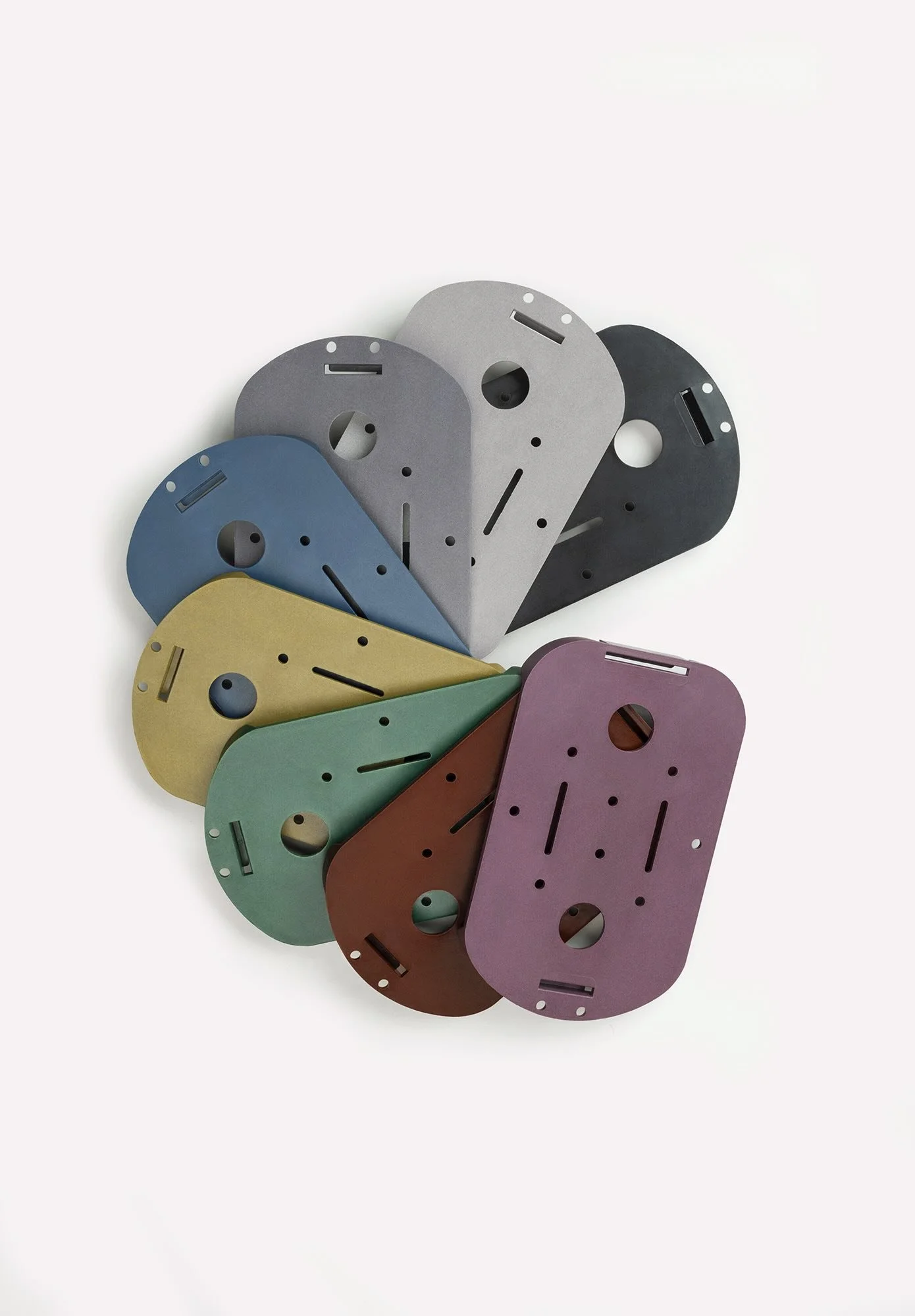
Renol® masterbatches for Polypropylene applications giving substantial CO2 reduction
When producing our masterbatches, Renol® is blended with a carrier polymer. We offer four different polypropylene masterbatches of which the Renol® content ranges from 50 to 70%, meaning the material contains at least 50% bio-based content. The masterbatches are drop-in solutions and can be used for injection moulding as well as extrusion.
Renol® Polypropylene masterbatches – with virgin or recycled carrier polymer
- Renol® recycled PP 50/50 masterbatch is our innovation for maximized carbon footprint reduction of PP plastics. Here, the lignin-based formulation is blended with recycled PP, allowing for up to 60% CO2 reduction in the final application compared to post-consumer recycled PP.
- Renol® virgin PP 50/50 masterbatch is our blend of lignin-based formulation and virgin PP, allowing for a significant CO2 reduction up to 40% in the final application compared to virgin PP.
Renol® PP Flex masterbatch for optimal impact strength
For optimal impact strength we offer Renol® PP Flex – a unique blend of lignin-based material and an elastomer additive, ready to be mixed with PP. Renol® PP Flex has 70% bio-based content, allows for up to 60% higher impact strength and 40% CO2 reduction in the final application compared to conventional PP.
Renol® PP Fusion masterbatch for balanced performance
Designed for applications that require both stiffness and toughness, this advanced masterbatch features an optimised elastomer/PP formulation. It matches the impact strength of conventional PP while delivering a net-negative carbon footprint. With 70% bio-based content, Renol® PP Fusion enables up to 45% CO2 reduction in the final application compared to conventional PP.
All our Renol® PP solutions come in granular form and work well with both recycled and virgin resins. They integrate seamlessly into your existing operations which means that no adjustments in process equipment are needed.
What is Renol®?
Derived from lignin, a by-product of the forestry or agricultural industries, Renol® reduces fossil material usages and enables fully recyclable end products while maintaining functionality.
Benefits
- Achieve up to 98 % CO2 reduction compared to virgin PP by combining Renol® masterbatch with recycled PP
- Drop-in sustainability additive, no changes needed
- Compatible with commercially available impact modifiers
- Renol® is recyclable both in standard open- and closed-loop recycling streams
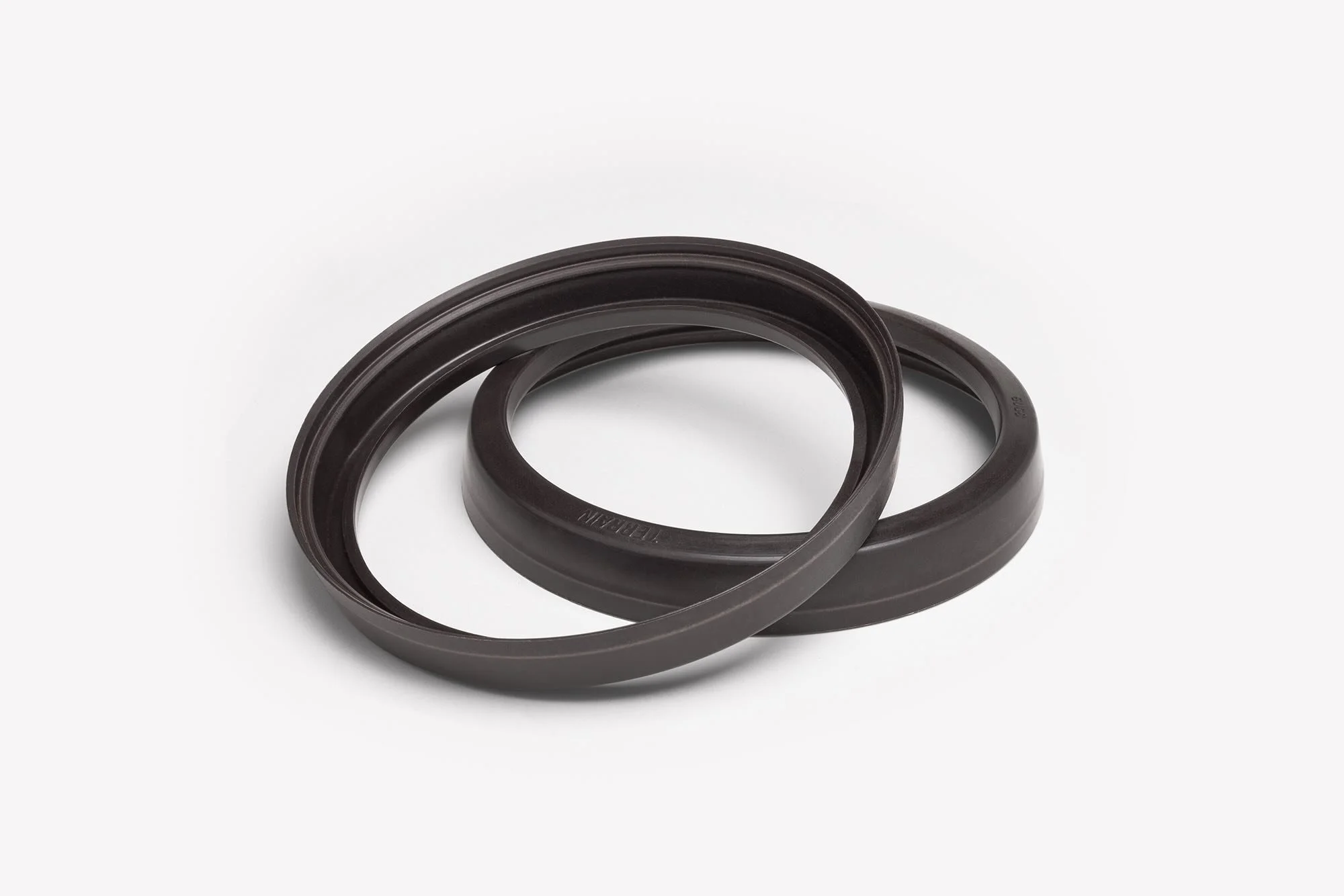
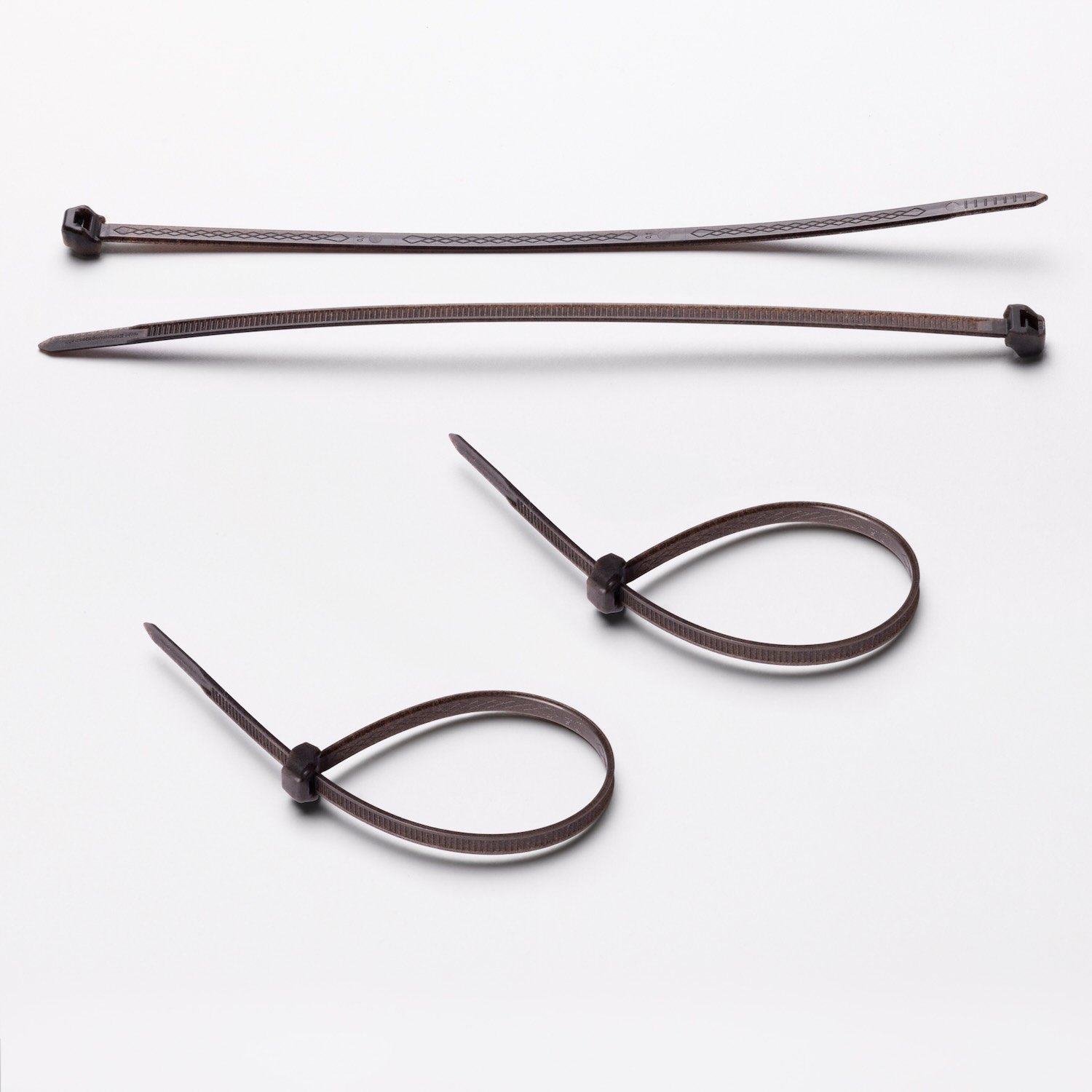
- Its natural color is a brown, reminiscent of the trees from which it is derived
- Possibility to colour in to other colours, except white and transparent colours
- Strong forest and circular narrative
Market fit
Industrial equipment
Building & construction
Consumer products
Automotive & mobility
Storage systems / Material handling
Furniture

Reduce your carbon footprint with Renol® and polypropylene
Growing trees act as a carbon sink, absorbing more CO2 than they release, making Renol® a carbon-negative material and contributing to significantly lower CO2 footprints in the end products.
Renol® recycled PP 5050
The Renol® masterbatch with recycled PP—containing 50% Renol® and 50% rPP—has a total GWP of 0.71 kg CO2-eq./kg and a temporary biogenic carbon uptake of -1.17 kg CO2-eq./kg, resulting in a total CO2 footprint cradle-to-gate of -0.46 kg CO2-eq./kg. The carbon balance is net-negative, demonstrating that it offsets its own emissions and sequesters additional CO2 from the atmosphere—positioning it as the preferred option for climate-conscious applications.

Renol® virgin PP 5050
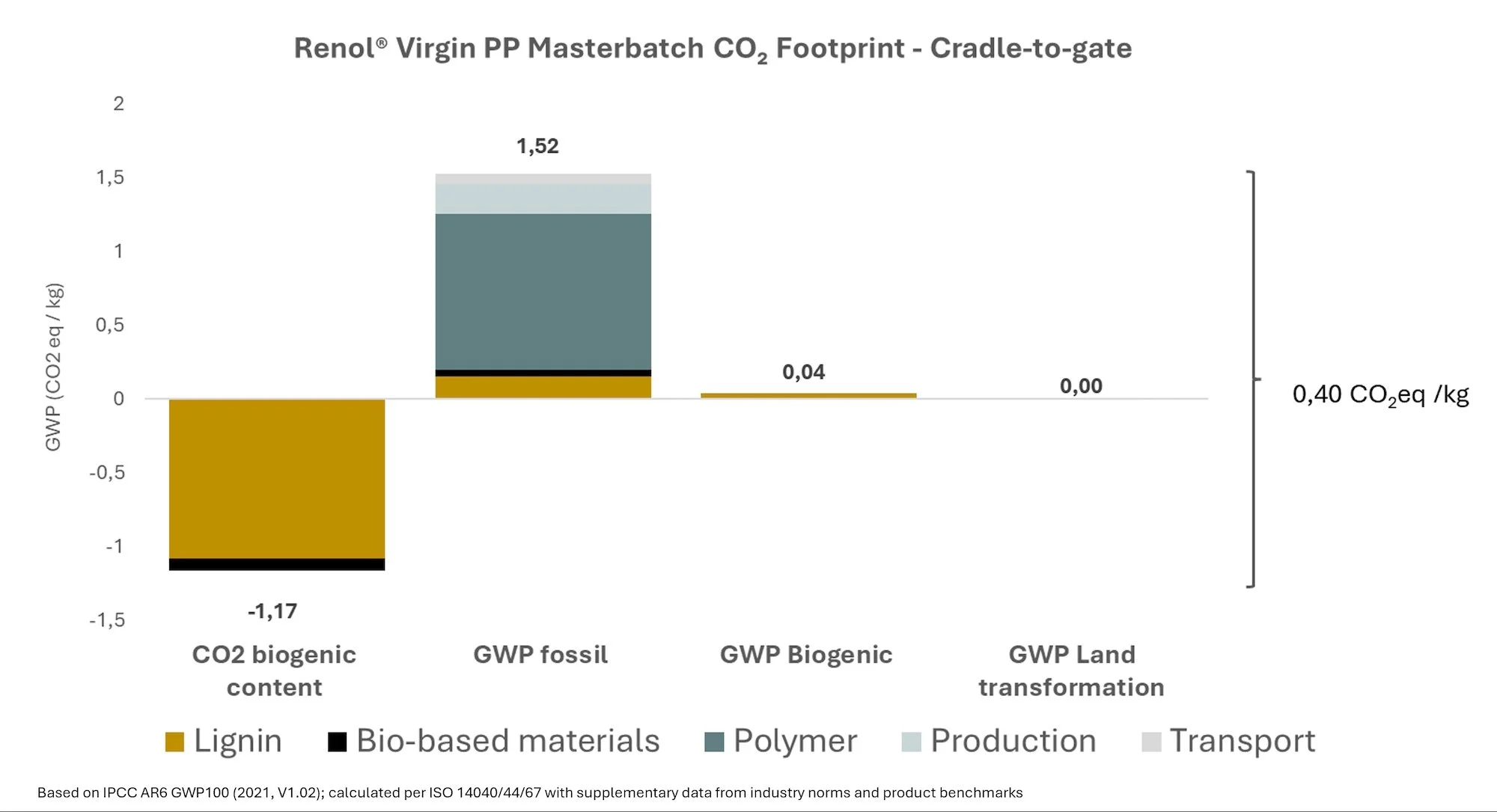
In comparison, the Renol® masterbatch with virgin PP—containing 50% Renol® and 50% PP—has a total GWP of 1.57 kg CO2-eq./kg and a temporary biogenic carbon uptake of -1.17 kg CO2-eq./kg, giving a CO2 footprint of 0.40 kg CO2-eq./kg.
Renol® PP Flex
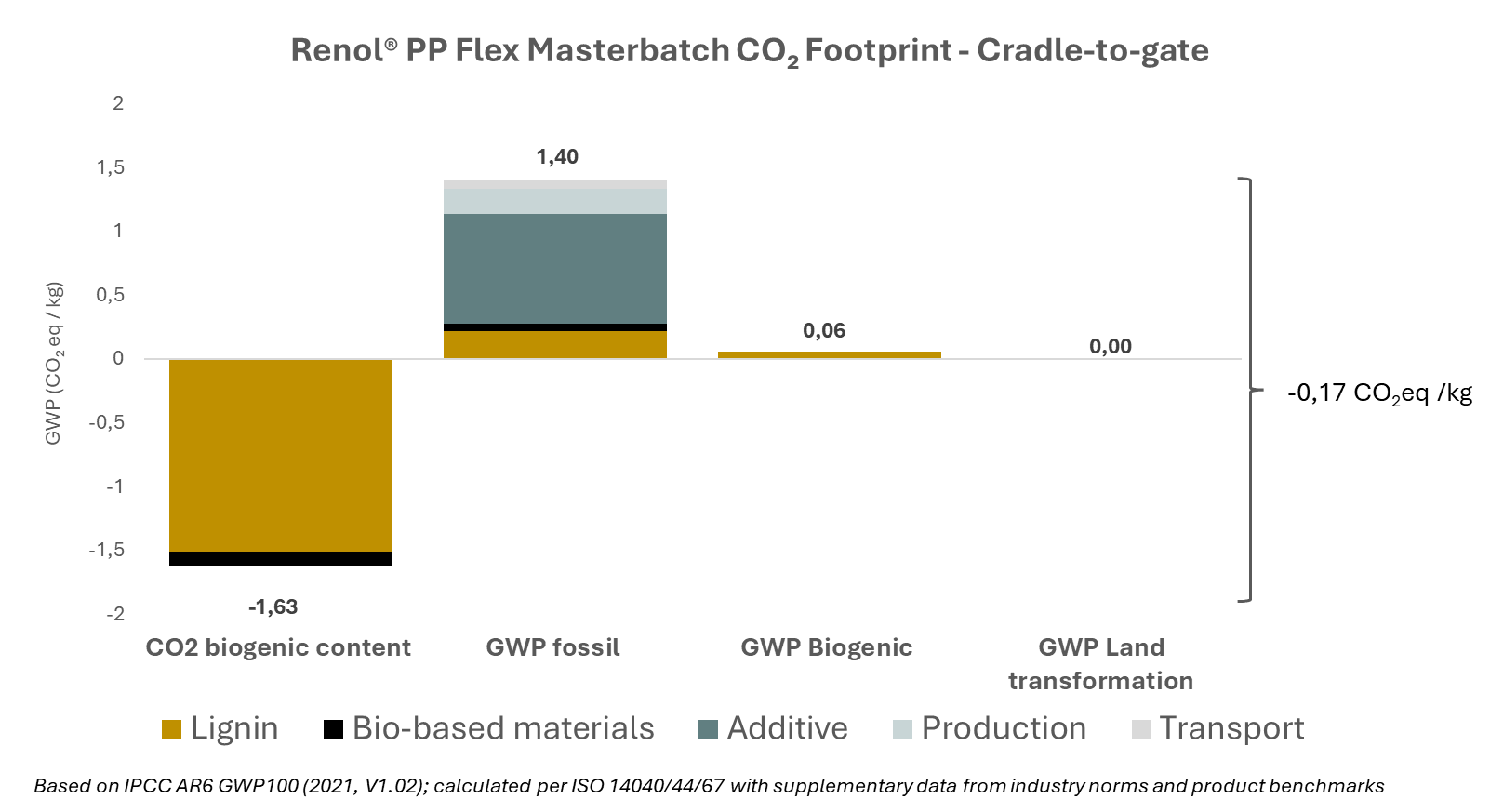
The Renol® PP Flex masterbatch – containing 70% Renol® and 30% elastomer additive – has a total GWP of 1.46 kg CO2-eq./kg and a temporary biogenic carbon uptake of -1.63 kg CO2-eq./kg, leading to a CO2 footprint of -0.17 kg CO2-eq./kg.
Renol® PP Fusion
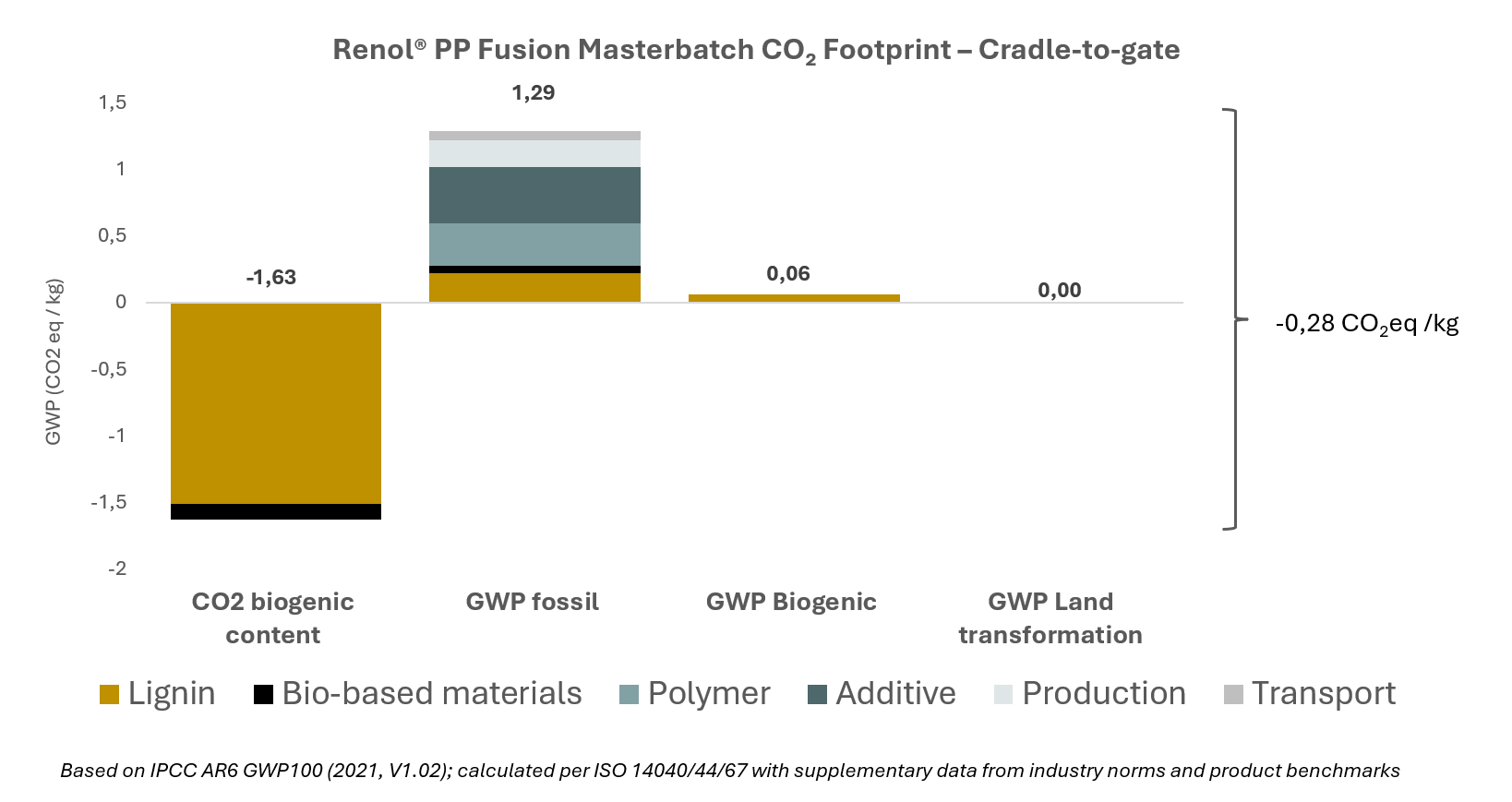
The Renol® PP Fusion masterbatch – containing 70% Renol® and a combination of elastomer additive and PP – has a total GWP of 1.35 kg CO2-eq./kg and a temporary biogenic carbon uptake of -1.63 kg CO2-eq./kg, leading to a CO2 footprint of -0.28 kg CO2-eq./kg.
Material portfolio for Polypropylene – documents for downloading
Renol® masterbatch with recycled Polypropylene
Renol® masterbatch with virgin Polypropylene
Renol® PP Flex masterbatch
Renol® PP Fusion masterbatch
FAQs
-
Renol® is made from 100% biobased materials: lignin and biobased oils. When we produce Renol® masterbatch we blend lignin with a carrier polymer. The bio-based content ranges from 50%-96% depending on masterbatch selection.
-
Renol® does not hinder recycling of the final products as it is recyclable both in standard open- and closed-loop recycling streams.
PP-applications containing Renol® are detected and sorted as PP in conventional recycling streams, this has been shown at Svensk Plaståtervinning. The material passes NIR and sink-and-float sorting. Moreover, it can be re-processed as traditional PP while maintaining mechanical properties.
Read more and see our certificates here: Our Innovation
-
No, Renol® masterbatches are primarily biobased, but they are not biodegradable according to EN standards. However, this is actually a benefit, as they are designed for long-lived applications and/or to be recyclable, contributing to a circular economy rather than being degraded.
-
Applications containing Renol® can be produced in a broad range of colours, except for white and fully transparent. The natural colour of Renol® is brown, coming from the trees from which it is derived.
-
We can control and assess materials as well as activities until the product leaves our gate. How and what the material is used for after that is outside of our control, therefore we present cradle-to-gate.
Cradle to grave data can be provided in collaboration with end user.
How to purchase?
Please get in touch with our sales team to find out more or ask for a quote.