
Lignin Industries materials for Polyethylene applications.
Renol® helps manufacturers meet sustainability goals without compromising on material strength or quality.
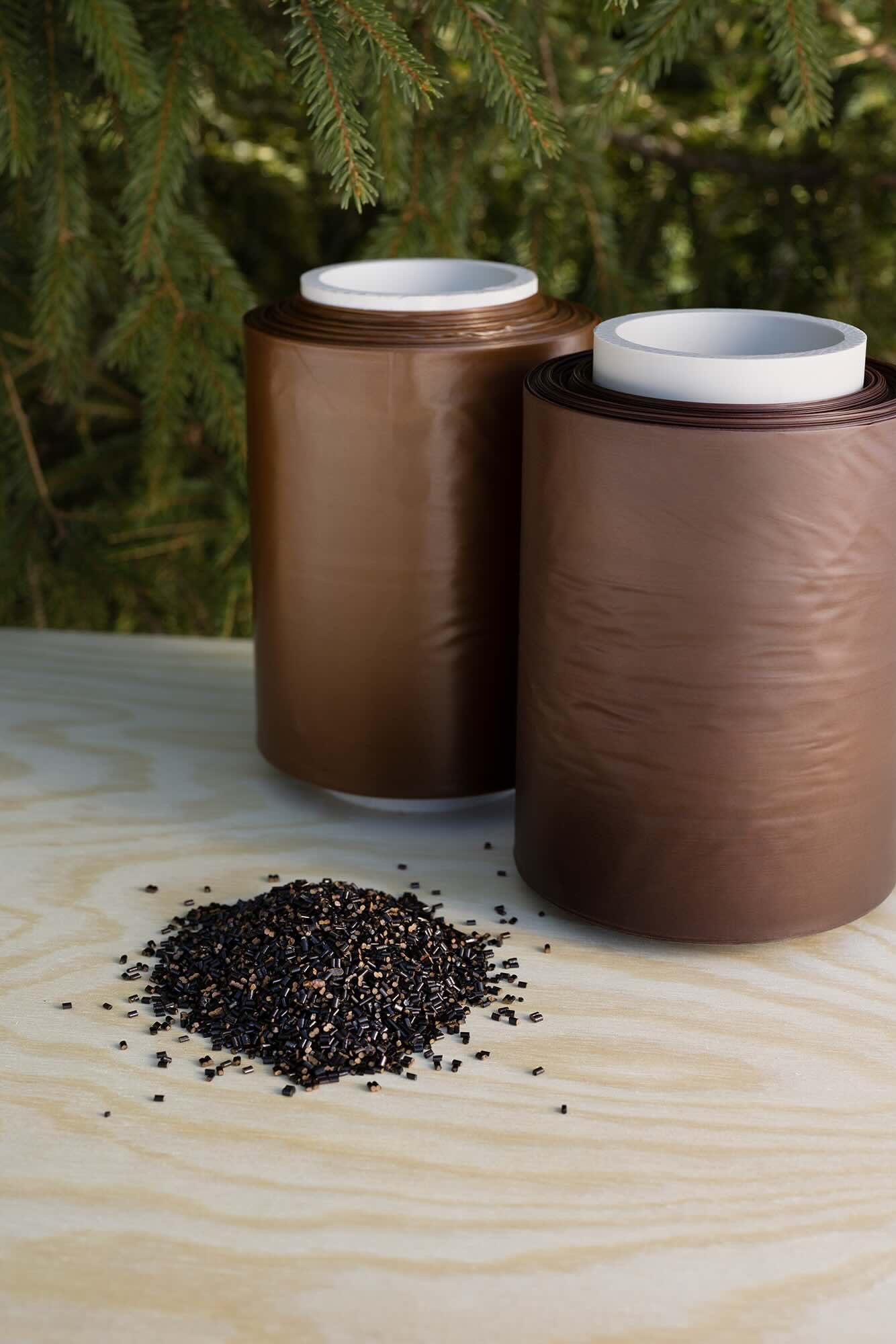
Renol® masterbatches for Polyethylene applications giving substantial CO2 reduction
Renol® Polyethylene masterbatches
When we produce Renol® masterbatches we blend lignin with a carrier polymer. We offer three different Polyethylene masterbatches of which the bio-based content ranges from 60%-96%. The masterbatches are drop-in solutions optimised for film but can be used for injection moulding as well.
- Renol® Film Zero masterbatch is our innovation for maximized carbon footprint reduction of PE plastics. Thanks to the optimized blend of bio-based content, it allows for 0 CO2eq/kg when blended with recycled plastics.
- Renol® Film Pro is a smart and flexible biobased solution, allowing up to 50% CO2 reduction in the final application compared to recycled PE, and 80% CO2 reduction compared to virgin PE.
- Renol® Film Go is our popular masterbatch blended with recycled plastics, giving a CO2 reduction of up to 30% in the final application compared to recycled plastics, and 70% CO2 reduction compared to virgin plastics.
All our Renol® PE solutions come in granular form and work well with both recycled and virgin resins. They integrate seamlessly into your existing operations which means that no adjustments in process equipment are needed.
What is Renol®?
Derived from lignin, a by-product of the forestry or agricultural industries, Renol® reduces fossil material usages and enables fully recyclable end products while maintaining functionality.
Benefits
- Achieve up to 100 % CO2 reduction compared to fossil PE by combining Renol® masterbatch with recycled PE
- Drop-in sustainability additive, no changes needed
- Compatible with virgin as well as PCR/PIR materials
- Renol® is recyclable both in standard open- and closed-loop recycling streams
- Renol® utilises lignin, a renewable forest by-product and a secondary material, not competing with food production
- Strong forest and circular narrative – Its natural colour is brown, reminiscent of the trees from which it is derived
- Compatible with existing printing processes
Product fit
E-commerce bags
In-store retail bags
Garbage/Waste bags
Timber wrapping
Industrial films
Logistical solutions (IM)
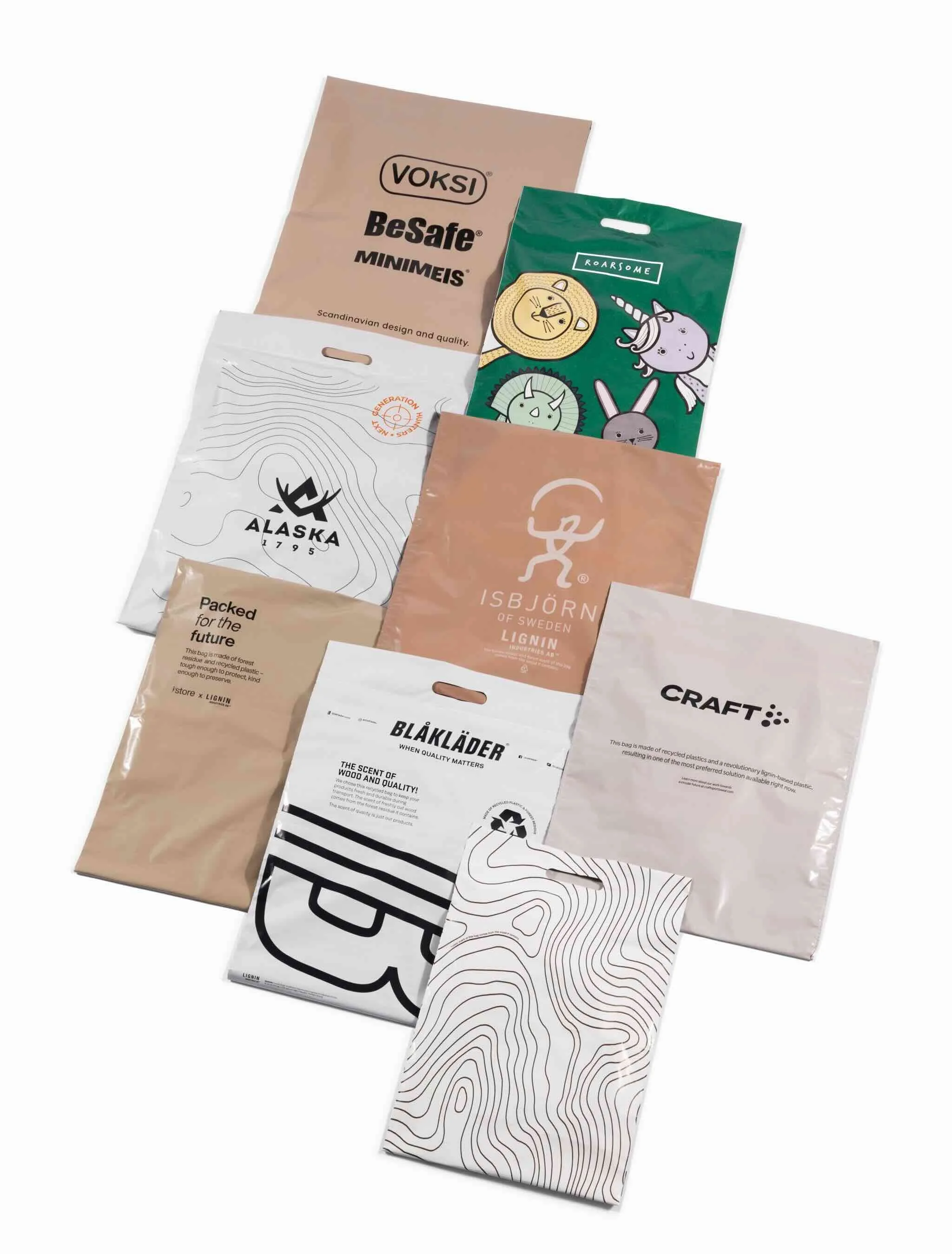
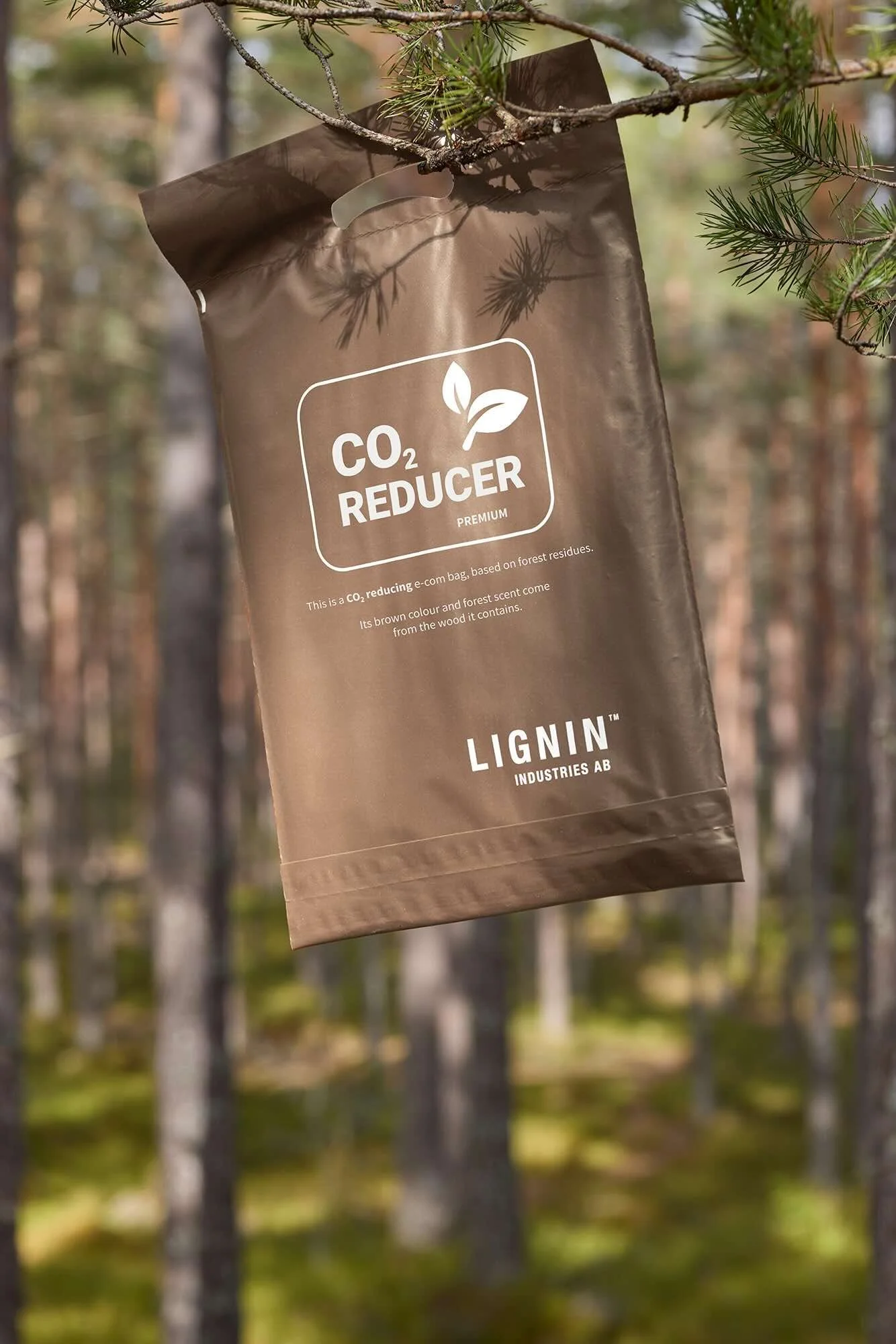
Our e-commerce bags offer the functionality of traditional plastics without the environmental cost. As consumers demand more sustainable solutions and brands and industries are under pressure to adopt sustainable alternatives and reduce their dependency on fossil fuels - our bags deliver the strength, durability, and flexibility of conventional plastics while being fully recyclable and significantly reducing CO2 emissions.
Choosing our packaging means your brand stays ahead, embracing both top-tier performance and sustainability in today’s competitive market.
- By combining Renol® with biobased and recycled plastics, we significantly reduce the CO2 footprint of the final product.
- Recyclable as traditional LDPE plastics.
- Same functionality and properties as conventional e-commerce bags.
- Dramatically reduces the logistic and storage needs compared to those required for paper e-commerce bags.
Paper or plastic for e-commerce packaging—unsure which is the right solution for your business?
Read our comparison of our e-commerce bag versus recycled and paper bags here:

Reduce your carbon footprint with Renol® and polypropylene
Growing trees act as a carbon sink, absorbing more CO2 than they release, making Renol® a carbon-negative material and contributing to significantly lower CO2 footprints in the end products.
Renol®Film Zero
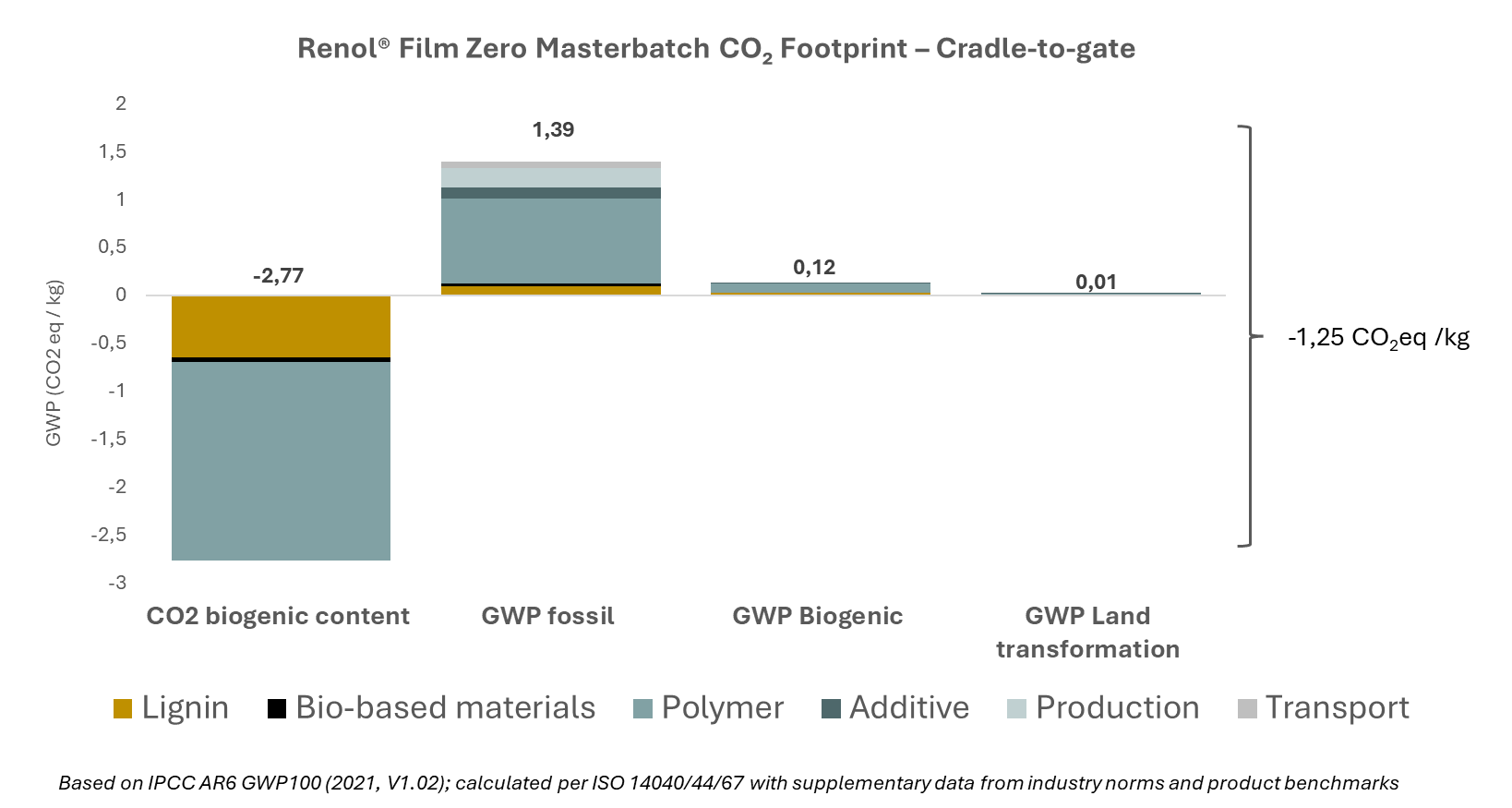
Renol® Film Zero is a premium masterbatch based on Renol® combined with bio-based materials and functional additives. The product has a total Global Warming Potential (GWP) of 1,53 kg CO2eq/kg and a temporary biogenic carbon uptake of −2,77 kg CO2eq/kg. This results in a cradle-to-gate carbon footprint of −1,25 kg CO2eq/kg. Developed for net-zero and balanced carbon applications where climate targets are critical and product quality must meet high expectations.
Renol® Film Pro
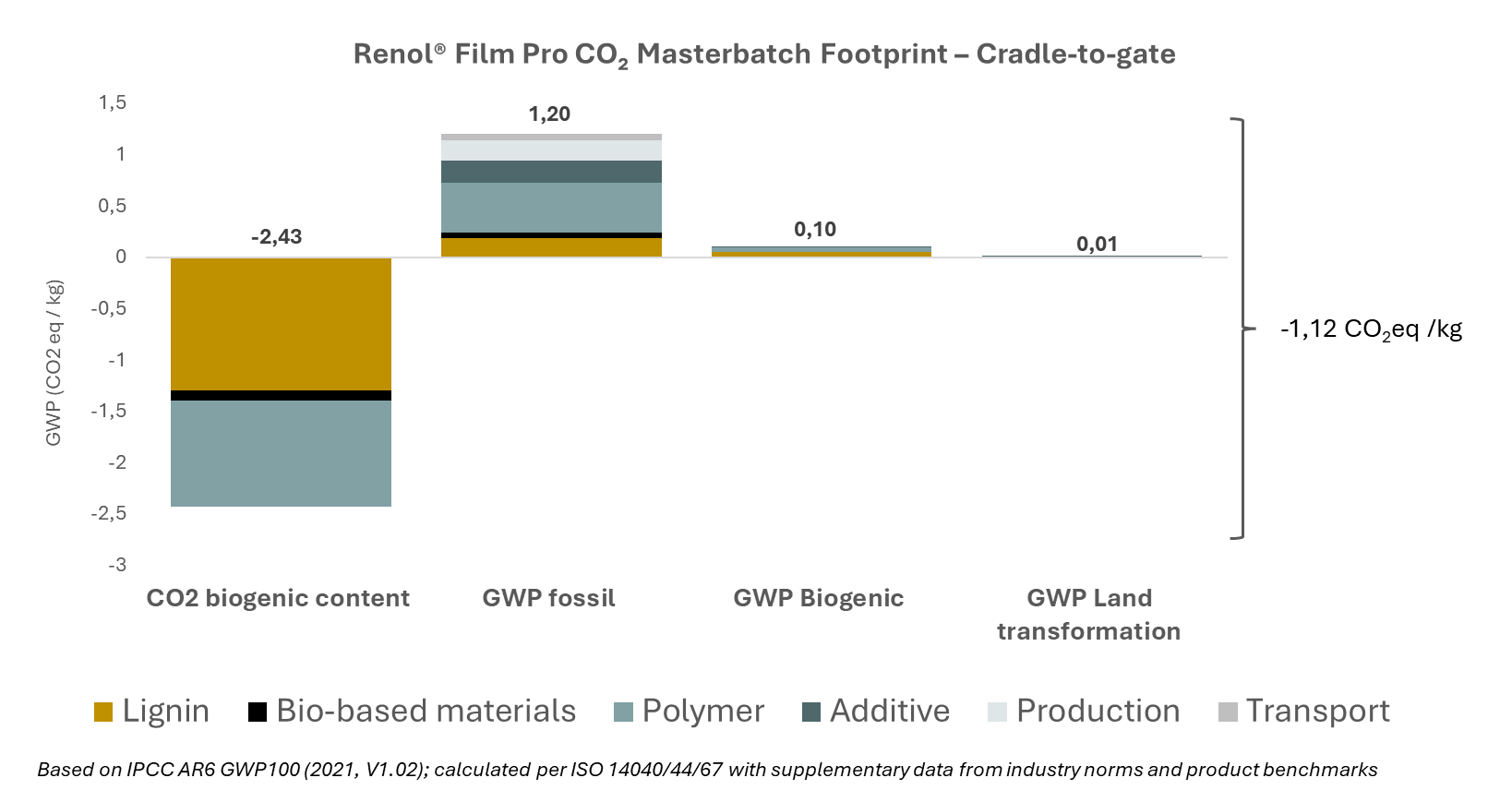
Renol® Film Pro is a carbon-negative masterbatch based on Renol® combined with bio-based materials and functional additives. The product has a total Global Warming Potential (GWP) of 1,31 kg CO2eq/kg and a temporary biogenic carbon uptake of −2,43 kg CO2eq/kg. This results in a cradle-to-gate carbon footprint of −1,12 kg CO2eq/kg. By combining strong material performance with a net-negative carbon balance, Renol® Film Pro represents the optimal balance between climate performance and functional capability, making it the preferred solution for film and packaging applications with ambitious sustainability goals.
Renol® Film Go
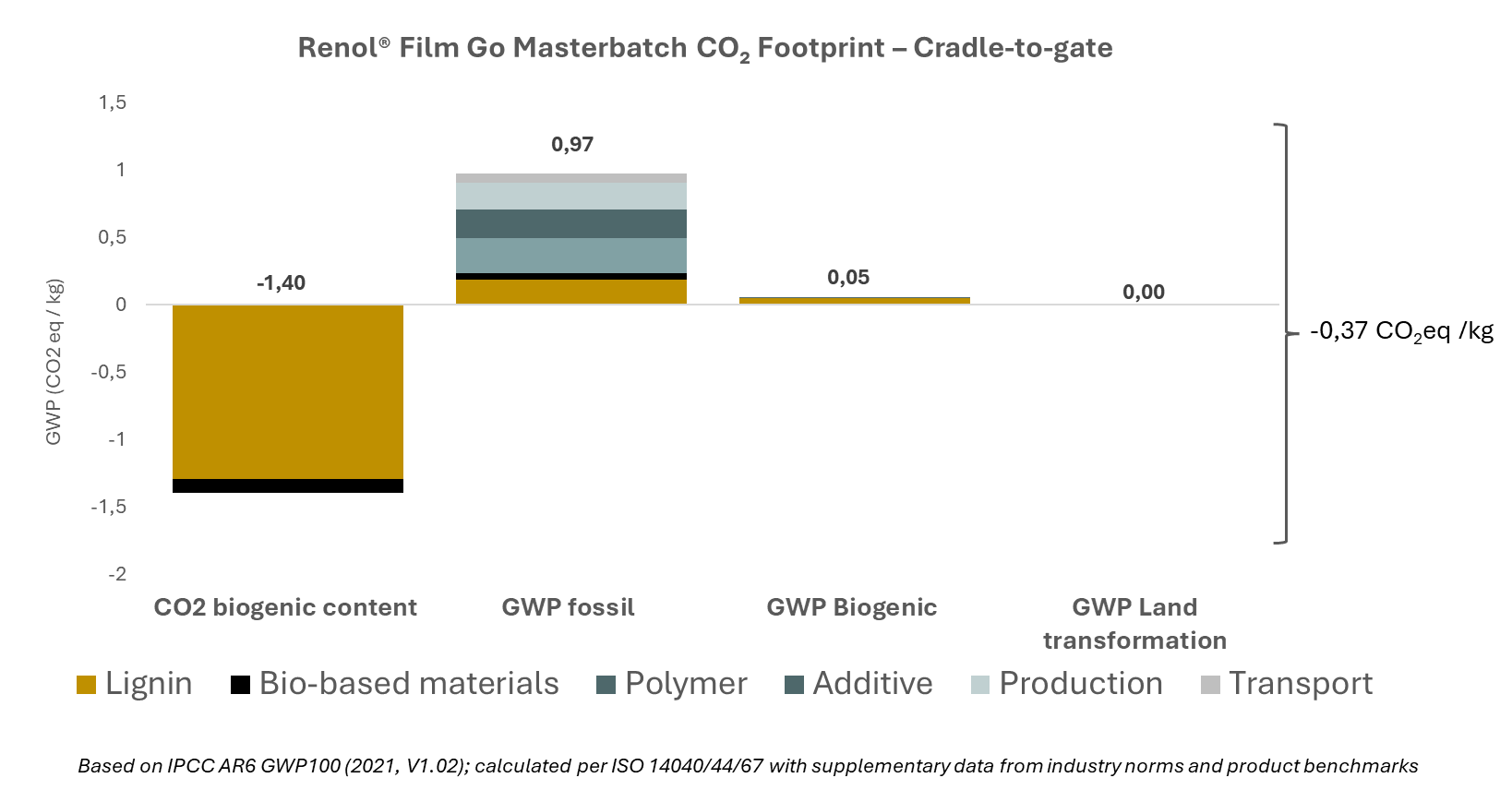
Renol® Film Go is an accessible, low-carbon masterbatch based on Renol® combined with recycled materials and functional additives. The product has a total Global Warming Potential (GWP) of 1,02 kg CO2eq/kg and a temporary biogenic carbon uptake of −1,40 kg CO2eq/kg. This results in a cradle-to-gate carbon footprint of −0,37 kg CO₂eq/kg. Renol® Film Go offers a cost-efficient pathway to reduce cradle-to-gate climate impact compared to conventional fossil-based solutions.
Material portfolio for Polyethylene – documents for downloading
Renol® Film Zero masterbatch
Renol® Film Pro masterbatch
Renol® Film Go masterbatch
FAQs
-
Renol® is made from 100% biobased materials: lignin and biobased oils. When we produce Renol® masterbatch we blend lignin with a carrier polymer. The bio-based content ranges from 60%-96% depending on masterbatch selection.
-
Renol® does not hinder recycling of the final products as it is recyclable both in standard open-and closed-loop recycling streams.
The Renol® bags are detected and sorted as LDPE in conventional recycling streams, this has been shownat Svensk Plaståtervinning. The material passes NIR and sink-and-float sorting. Moreover, it can be re-processed as traditional LDPE while maintaining mechanical properties.
Read more and see our certificates here: Our Innovation
-
No, Renol® masterbatches are primarily biobased, but they are not biodegradable according to EN standards. However, this is actually a benefit, as they are designed for long-lived applications and/or to be recyclable, contributing to a circular economy rather than being degraded.
-
Yes, it does. Films with Renol® can achieve the same mechanical requirements, tested in line with existing ISO standards.
-
We focus on cradle-to-gate due to the fact that it includes activities we can control and thus assess; our raw materials, manufacturing and transports.
However, cradle-to-grave data can be achieved through collaboration with the end user to assess the usage and end-of-life phases.
How to purchase?
Please get in touch with our sales team to find out more or ask for a quote.